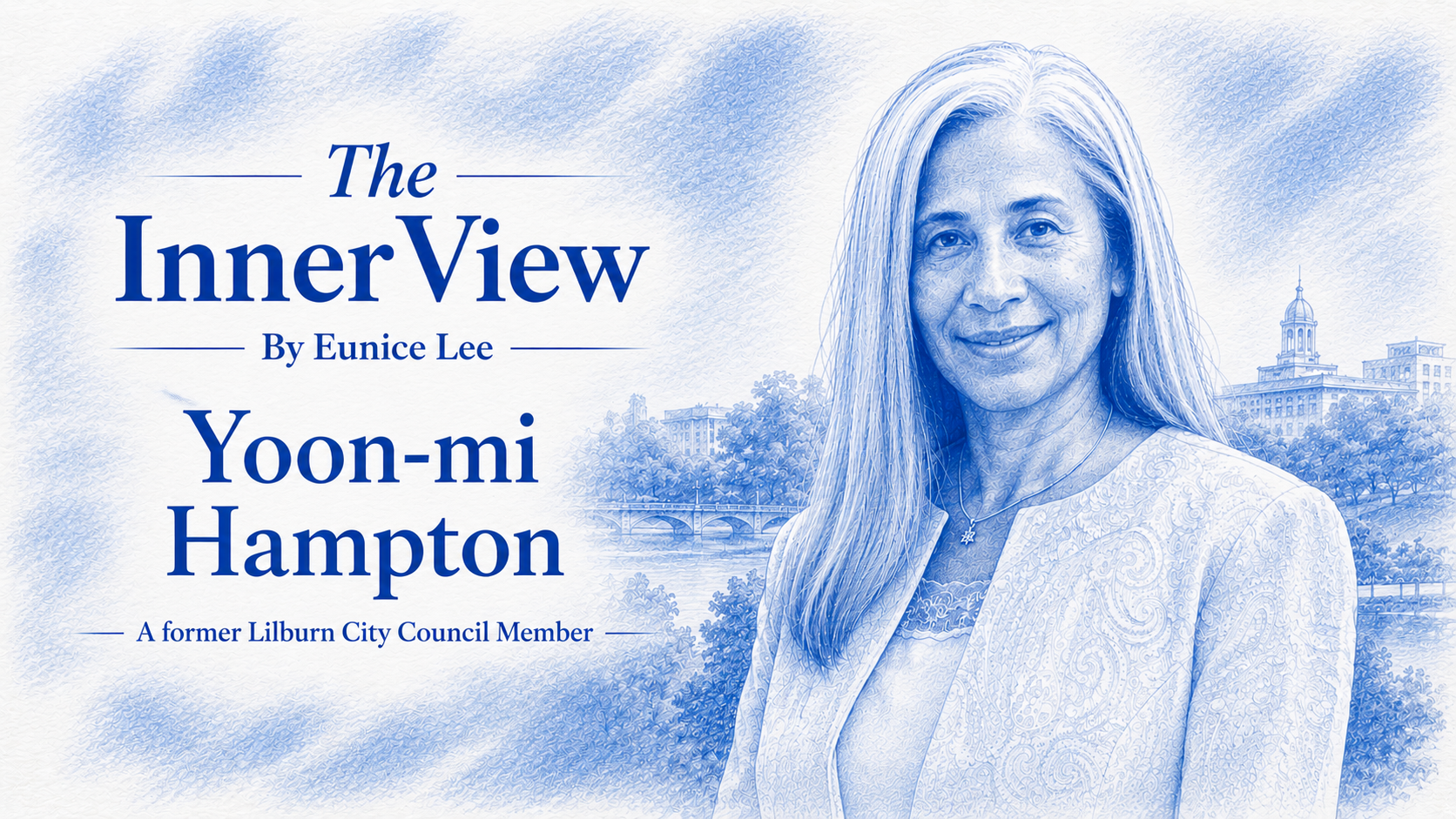
Born in the rubble of postwar Korea to a Korean mother and an African American soldier, Yoon-mi Hampton was given away more than once — and has spent her life giving back the love she was given.
By Eunice Lee · June 24, 2026
There is a woman.
Born in Uijeongbu in 1960 to a Korean mother and an African American soldier, she was adopted in Korea and came to the United States at thirteen. Choice was never hers to make. Even so, hardship never quite claimed her.
Yoon-mi Hampton.
The first Asian council member among Gwinnett County’s sixteen cities. The first African American council member in the city of Lilburn.
Those facts tell you what she became.
They do not tell you who she is.
Meet her once, and you may find yourself wondering where that quiet warmth comes from—how someone who has endured so much can still make kindness seem effortless.
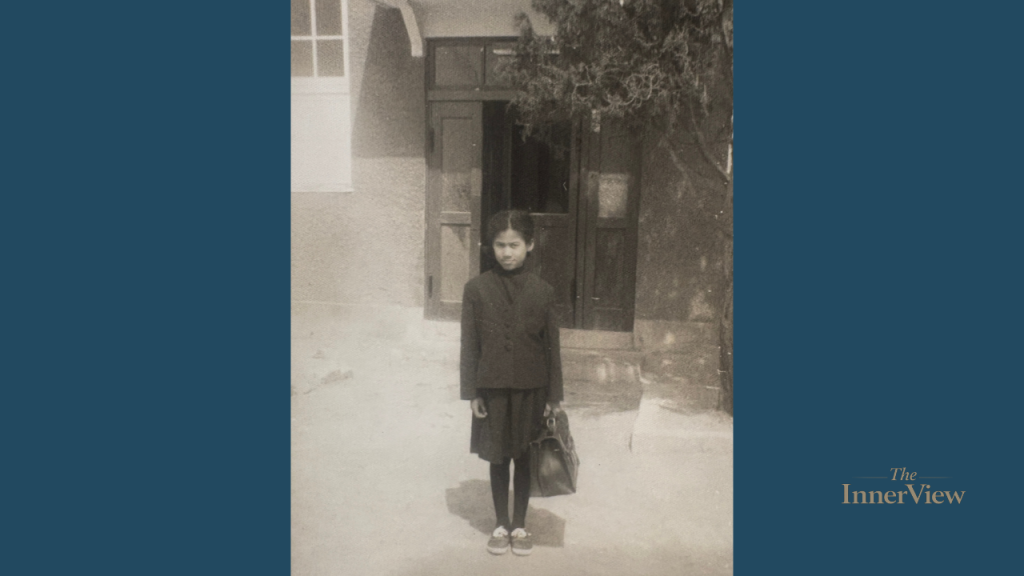
Start with one faded black-and-white photograph.
What the War Took
What kind of family were you born into?
My grandfather’s family came from the North. They were yangban¹, Korea’s old aristocracy, and had lived comfortably near Pyongyang². There were servants in the house. My grandfather wore a gat and sat with the quiet dignity of another era.
Then the war took everything.
Forced to flee south, they lost everything they owned. My grandfather never recovered from the shock. He turned to alcohol, and the burden of supporting the family fell to my mother, the eldest daughter.
Those were desperate years. For a young woman in postwar Korea, there were few choices. But my mother and my aunt were among the rare women of their generation who had received an education. My mother even spoke some English. She often wrote letters for neighborhood women marrying American servicemen.
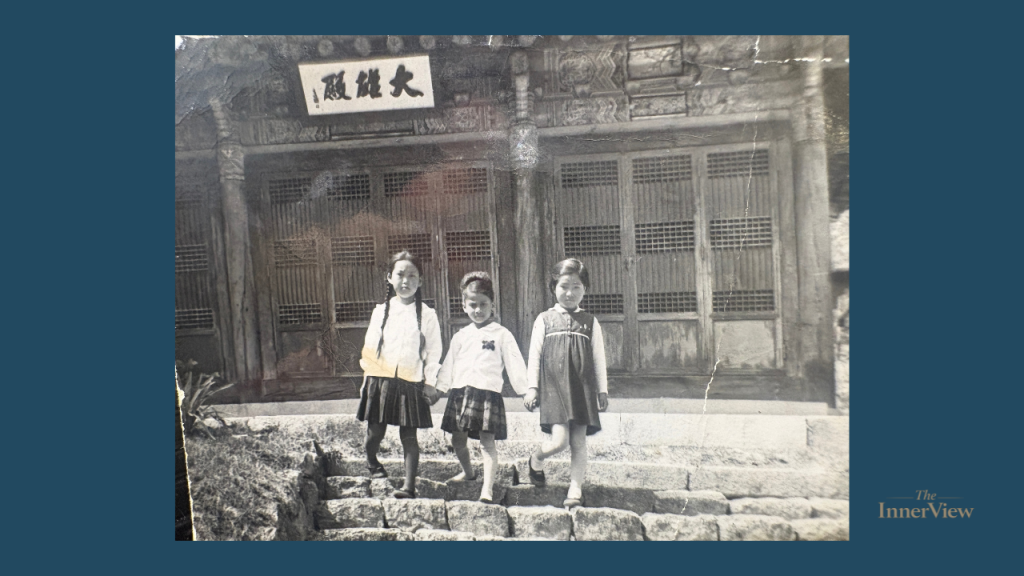
I was born in Uijeongbu³ in 1960. My mother, my grandmother, and my aunt raised me together. Think what it meant to raise a Black mixed-race child in Korea in those days. And yet, my mother smothered me with kisses. I was loved. I was loved so much.
1. Yangban — the scholar-official aristocracy of Korea’s Joseon dynasty (1392–1897), the country’s traditional ruling class. 2. Pyongyang — a major city in the north of the Korean peninsula, today the capital of North Korea; the family fled south during the Korean War. 3. Uijeongbu — a city just north of Seoul that grew up around U.S. Army garrisons after the Korean War.
The Last Photograph
Do you have any memory of your birth father?
Look at this photograph. It’s black and white now, but it wasn’t then. I remember the colors. Red shoes. A blue outfit. White with red stripes. It was 1964. I was four, maybe five.
There was an African American soldier in my life at the time. Wherever he went, he carried me in his arms or kept me close. I never knew he was my father.
It must have been the day he was leaving. He came in uniform. I still remember how handsome he looked. My mother said, “Yoon-mi, let’s go into town and have our picture taken.”
The three of us posed together. Then he and I. Then my mother and I. At the very end, my mother said, “Yoon-mi, this last one is yours. It belongs to you. Stand here by yourself.”
Something didn’t feel right. I kept turning around to look at him. Even the photographer seemed to linger. I was only a little girl, but I remember thinking, Something is happening. I smiled for the picture. When I turned around again, he was gone.
I never saw him again.
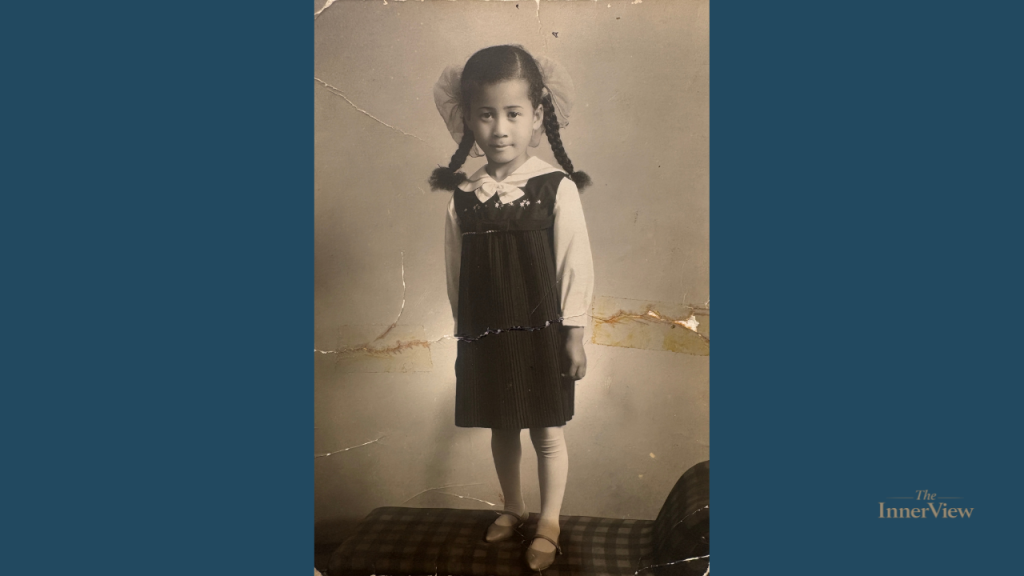
Her mother had known. A Black mixed-race daughter had little future in Korea then. If her child were to have one, it would almost certainly be in America. The photograph would become the only thing her father could leave her. His name was Charles Bernard White. Yoon-mi Hampton would not learn it for another half century.
“God Is Watching You”
What kind of person was your mother?
My mother had the gentlest heart.
Once, the neighborhood children were tormenting a beggar. They handed him dried bird droppings and told him it was a rice cake. I slapped it out of their hands and brought him home. My mother set the table without hesitation. He smelled worse than an outhouse, yet she warmed the rice over the wood fire, laid out a spoon and chopsticks, and served him as she would any guest. That was the kind of woman she was.
Maybe that’s why I grew up unable to look down on anyone. When I got a new pair of shoes, I’d give them to the friend whose shoes had holes and wear the old ones myself. When I received pencils from the army base, I gave them away. My mother always told me, “Yoon-mi, even when no one is watching, God is watching you. So be honest. And help people whenever you can.”
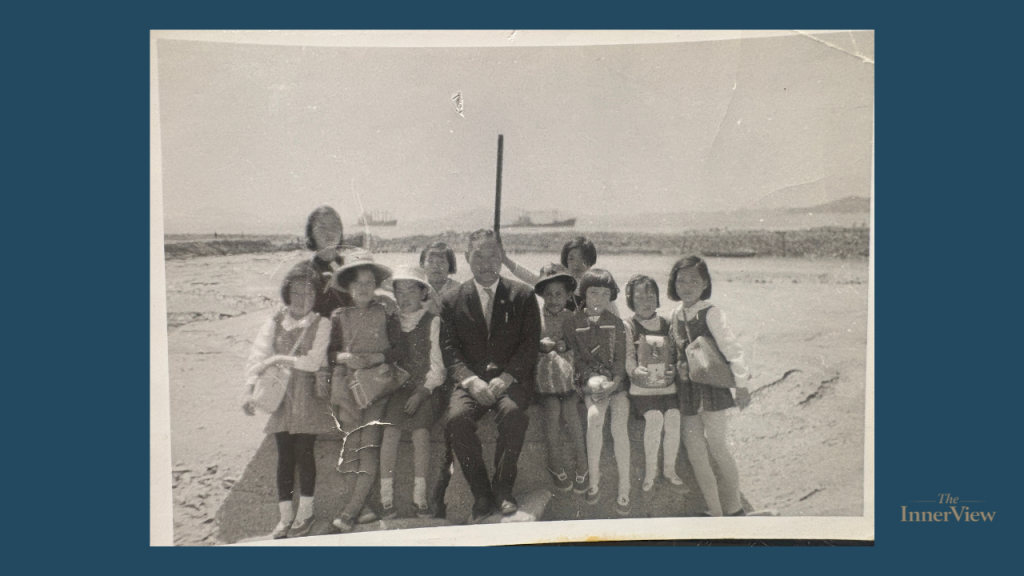
Once, I had a terrible stomachache and didn’t want to go to school. My aunt thought I was pretending, dragged me there anyway, and spanked me. It was the first time anyone had ever hit me. My mother was away working in Dongducheon⁴, but when she heard what had happened, she scolded my aunt. “If this child says she’s sick, she’s sick. She doesn’t lie. Don’t ever lay a hand on her again.”
Those were the roots she gave me. They taught me the difference between right and wrong. Without them, I might have become a very different person and never known the difference.
4. Dongducheon — a town north of Seoul built up around a large U.S. military base, where many Korean women worked in businesses serving American soldiers.
The Night She Didn’t Come Home
How did you lose your mother?
My mother worked in Dongducheon to save me. She met American servicemen there, hoping one of them might marry her and become my father. She believed America might offer me a life without the prejudice I faced in Korea.
I was nine, maybe ten, and my mother was pregnant. We were eating dinner when my mother suddenly cried out. My aunt and I looked up in shock. Water spilled onto the floor, and I asked, “Mom, did you wet yourself?” My aunt rushed to clean it up.
She changed her clothes, held me tightly, and kissed me. “Yoon-mi, Mommy’s going to the hospital. Be good.” Those were the last words she ever said to me.
Our house stood at the edge of the village, a long walk from the main road. I watched my mother and my aunt disappear into the distance.
She never came home.
A few days later, I wandered into my mother’s room, put on her gown, and fell asleep. My aunt shook me awake. Half asleep, I heard myself whisper, “God, please don’t let my mother die.”
A scream filled the house.
A taxi driver had carried her home on his back through the darkness. The hospital could do nothing more. All the way home, they said, she kept repeating the same words.
“I can’t die. I have to live. I have Yoon-mi.”
Years later, after I became a nurse, I finally understood. Her baby had died in the womb. The infection spread through her body.
Only then did I understand how my mother died.
A Prayer for a Father
What happened after she was gone?
When my mother died, I came home from school to find my uncle had taken over the house and forced my aunt out. He had always frightened me. Now, with my mother gone, he raised his hand to me, too. I looked him in the eye and said, “If my mother were here, you wouldn’t dare hit me.” If she had lived, he never would have.
My aunt had no way to raise me on her own. “Yoon-mi,” she said, “what if you went to an orphanage? Maybe someone would adopt you, and you could go to America.” So she took me there.
The orphanage was in the next village, close enough that I could still walk to my grandmother’s house after school and spend time with my aunt. There was a strict curfew, and children who broke it were beaten. But the director adored me. He looked the other way whenever I came back late and often said that if no one ever adopted me, he would raise me himself.
I lived there for about two years. In those days, all I had was God.
I would pray by myself: “God, please send me a father so I can go to America.”
A Stranger in the Doorway
How did you meet your adoptive father?
My adoptive father, Nathan Butler, was a U.S. Army sergeant who had served in both the Korean and Vietnam wars. After retiring from the military, he stayed in Korea, working for an engineering company. He once told me he couldn’t bear the thought of returning home—to the racism and threat of lynching that still awaited Black men in America.
He had long wanted to adopt a child. One evening, over dinner with fellow servicemen in Busan, he mentioned it. Someone told him about a mixed-race girl living in an orphanage in Uijeongbu. By the time dinner was over, he was already on the road to meet her.
That night, the deputy director woke me and told me to come to the office. Still rubbing my eyes, I opened the door.
A broad-shouldered man in uniform stood there. Something about him felt familiar. Could he be my father?
He smiled but said nothing. The director winked at me and said, “Yoon-mi, go back to bed.”
The next morning, I wasn’t sure whether I had dreamed it. I sat alone behind the orphanage, wondering. The deputy director found me there.
“What’s wrong?” he asked.
“I dreamed a daddy came for me.”
“Yoon-mi,” he said, “it wasn’t a dream. That man is going to be your father. He’ll come back for you. And he’ll take you to America.”
I ran. I laughed. I jumped until I couldn’t jump anymore.
In 1973, at the age of thirteen, I left for California.
5. Busan — South Korea’s second-largest city and principal port, on the southeastern coast.
Between Two Parents
It was the America you had longed for. What was it like?
There is no simple way to describe my life in America.
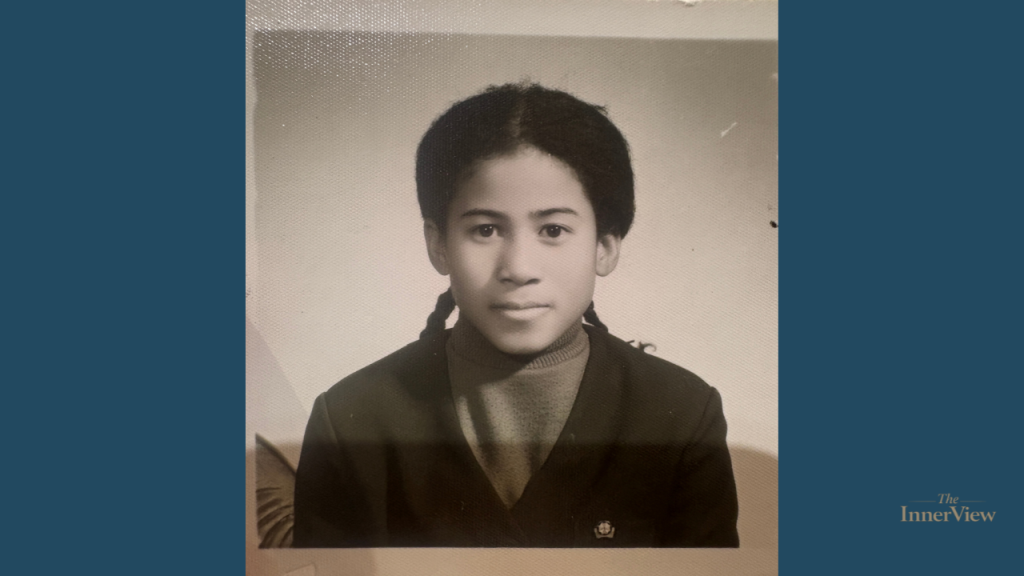
I had a father who cherished me and a stepmother who never wanted me. I grew up between those two worlds.
My stepmother was Korean, and she had opposed the adoption from the beginning. The little girl who had been surrounded by love in Korea suddenly found herself living without it. She didn’t want me to go to college, either. “What’s the point?” she’d ask. The beatings were so severe that, even today, the pain in my back sometimes keeps me awake at night.
My father’s work kept us moving. In 1975, we spent two years in Fairbanks, Alaska, while he worked on the Trans-Alaska Pipeline. Two years later, his company sent him to Yeosu⁶, South Korea, and in 1978, I graduated from the foreign school there.
Then, in 1979, something happened that I have never forgotten.
I was walking alone on Corona del Mar Beach in California when I suddenly felt drawn to one spot in the sand. I knelt almost without thinking and began to dig. My hand struck a weathered wooden plaque. There were words carved into it that I couldn’t read.
I brought it home to my father. He opened his Bible, found the verse, and said, “This is God’s word for you.”
It was Proverbs 3:6.
“In all your ways acknowledge Him, and He shall direct your paths.”
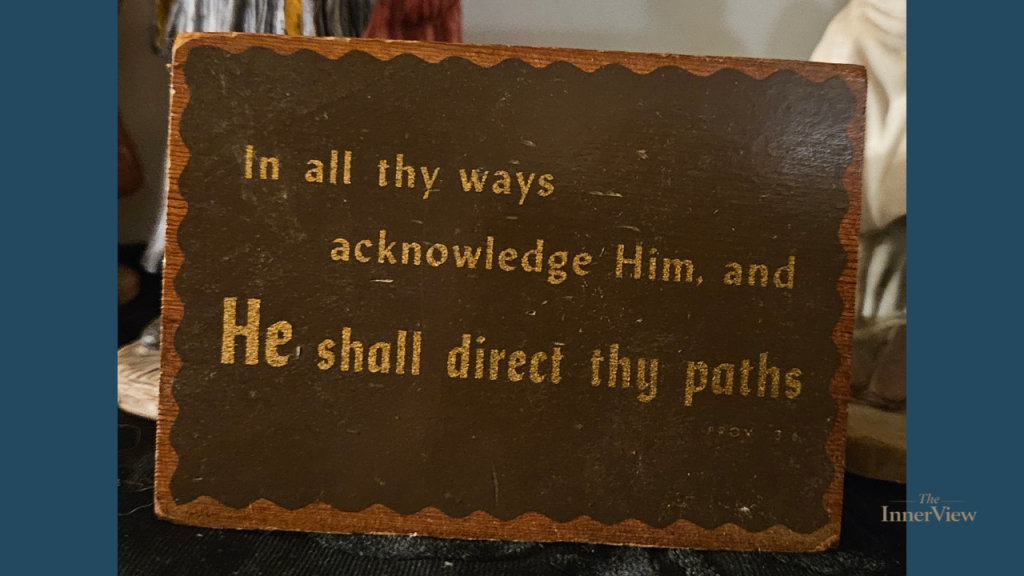
I decided that day to build my life around those words.
Life at home did not become easier. But my father never stopped believing in me. With his encouragement, I went to college. I left that house. In 1983, I graduated from Santa Ana College with a nursing degree and became a Licensed Vocational Nurse.
6. Yeosu — a port city on the southern coast of South Korea.
The Last Phone Call
You were very close to your adoptive father.
I had planned to become a registered nurse, but then my father developed heart problems. I put my studies on hold. I wanted to stay close to him.
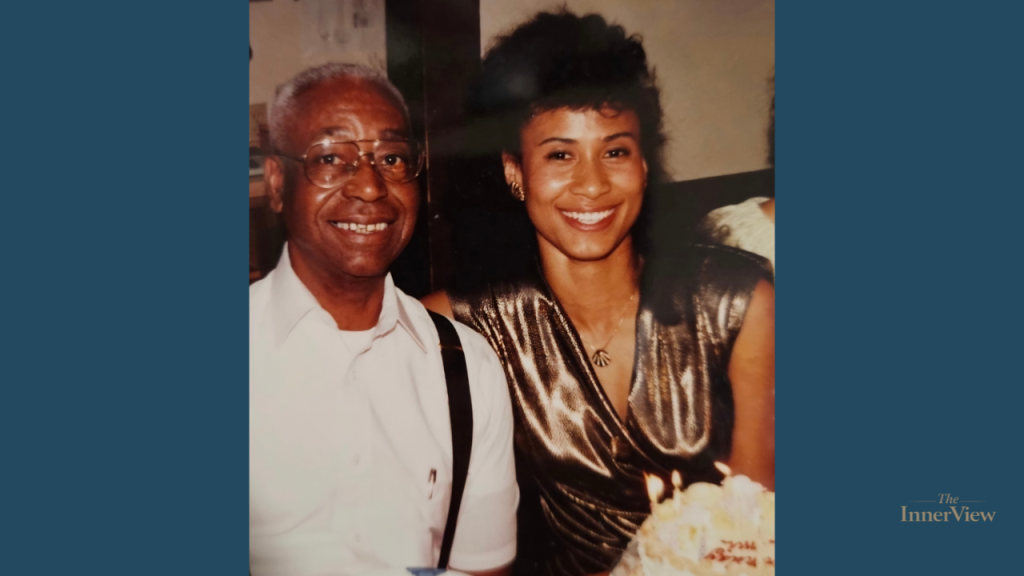
He became California’s first African American Subway franchise owner in the early 1980s. For the next eight years, I helped run the restaurant. I never became an R.N., but I have never regretted that decision. Those years with my father were a gift.
Every night, before going to bed, I’d call him.
“I love you, Dad.”
Every Sunday, we sat together in church.
Then, in 1992, nine months before my wedding, came our last phone call.
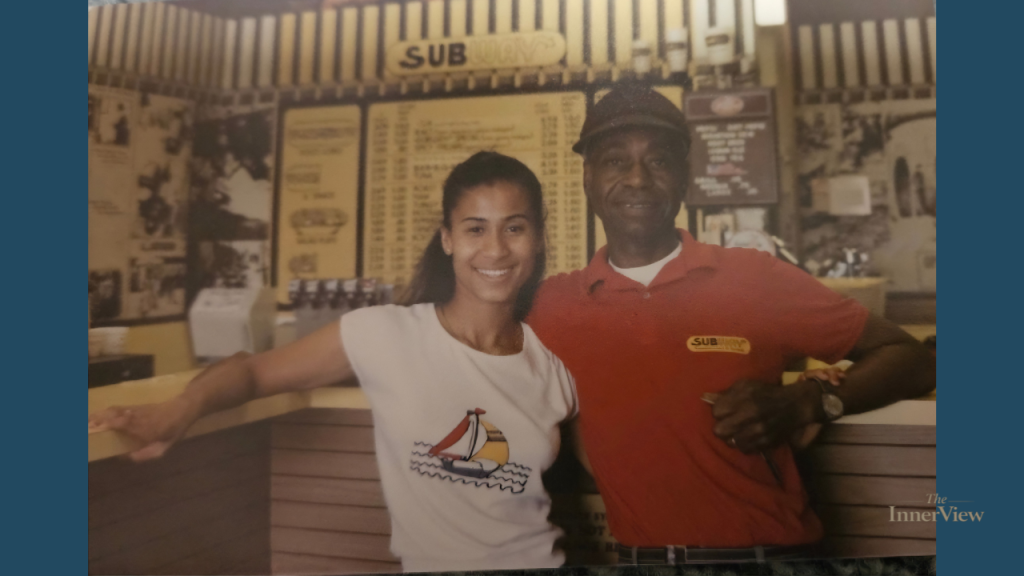
That evening was no different. We talked, I told him I loved him, and we said goodnight. A few hours later, the phone rang again. It was my father. He said he felt cold and that something wasn’t right. I hung up and drove to his house as fast as I could. By the time I arrived, he had already collapsed.
For the first time in my life, I used the CPR I had learned in nursing school. I performed it on my own father. He died at the hospital.
I was heartbroken. But I have never carried regret. I had told him I loved him every single day, right up to the last.
That’s why I tell people now: tell your family you love them every day, especially your children. None of us knows which conversation will be the last.
Prince Charming
How did you meet your husband, James?
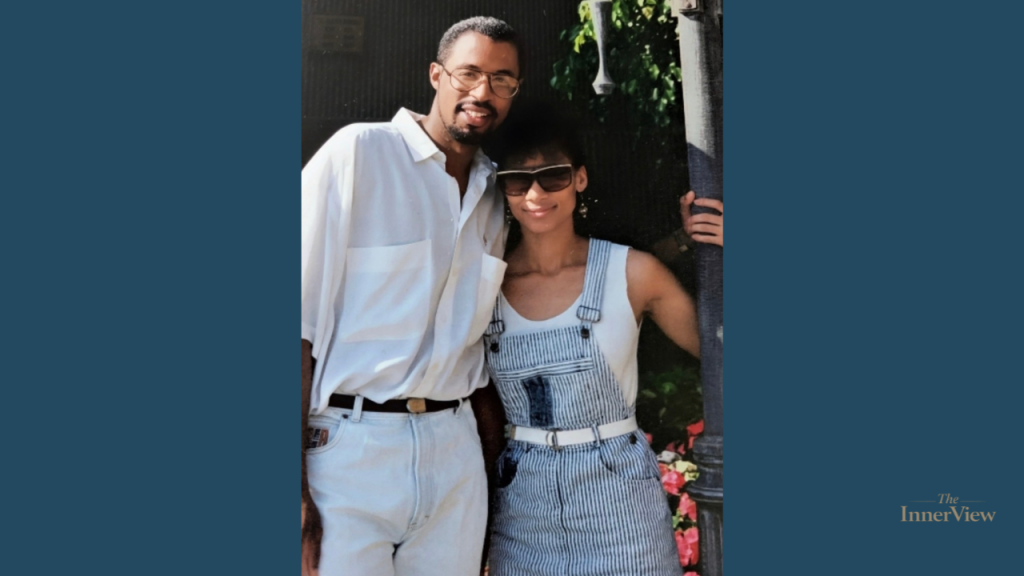
We met in May 1991 at a wedding in Brockton, Massachusetts. He was a groomsman, and I was a bridesmaid. We had only just met when he looked at me and asked, “Will you marry me?”
The truth is, when I was nineteen, I wrote God a letter. Hidden beneath my blankets, I made a list of everything I hoped for in a husband, one wish after another. He was the answer to that prayer, and by the time he came into my life, I was already well past thirty.
His name was James Hampton.
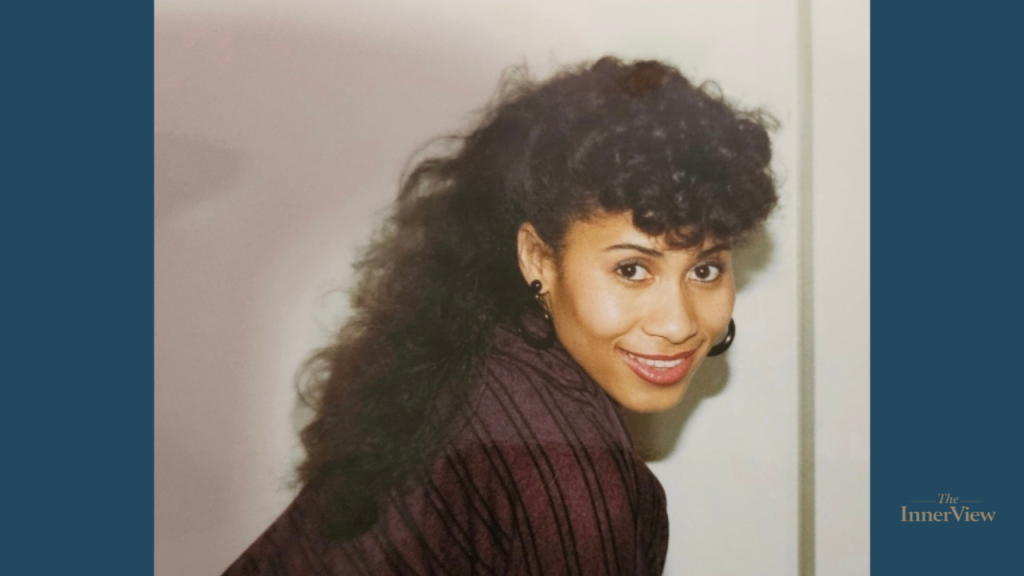
That September, we had our first date at Universal Studios in Los Angeles. He lived in Georgia, and I lived in California, so our relationship stretched from one side of the country to the other. Two years later, in May 1993, we were married in Santa Ana, California.
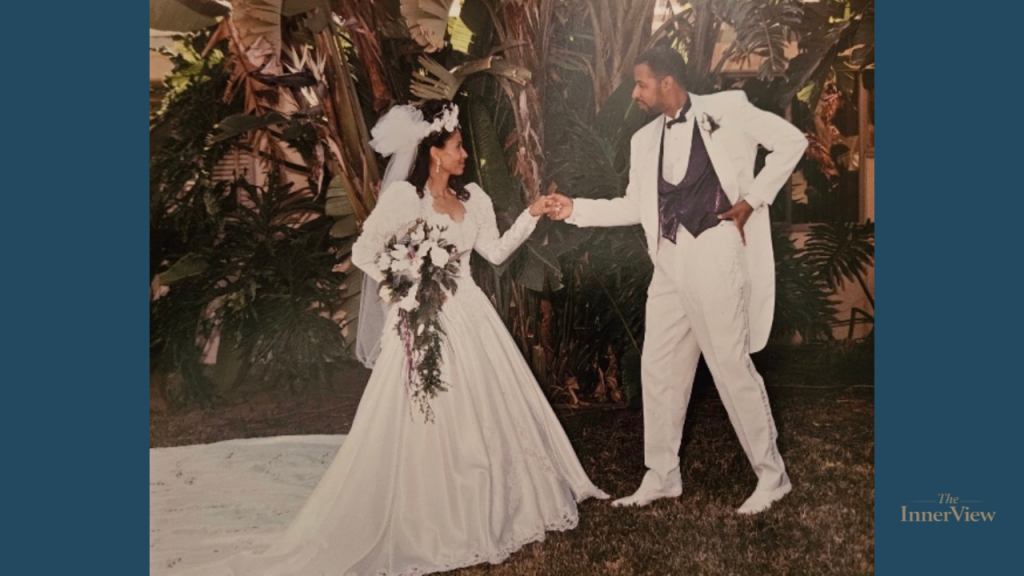
Leaving California wasn’t easy. The people who had loved me, encouraged me, and become family were all there. But I believed God was leading me, so I followed James to Georgia.
Looking back, I often think about the wooden plaque I found buried in the sand at Corona del Mar. It seemed to have been waiting for me long before I ever found it.
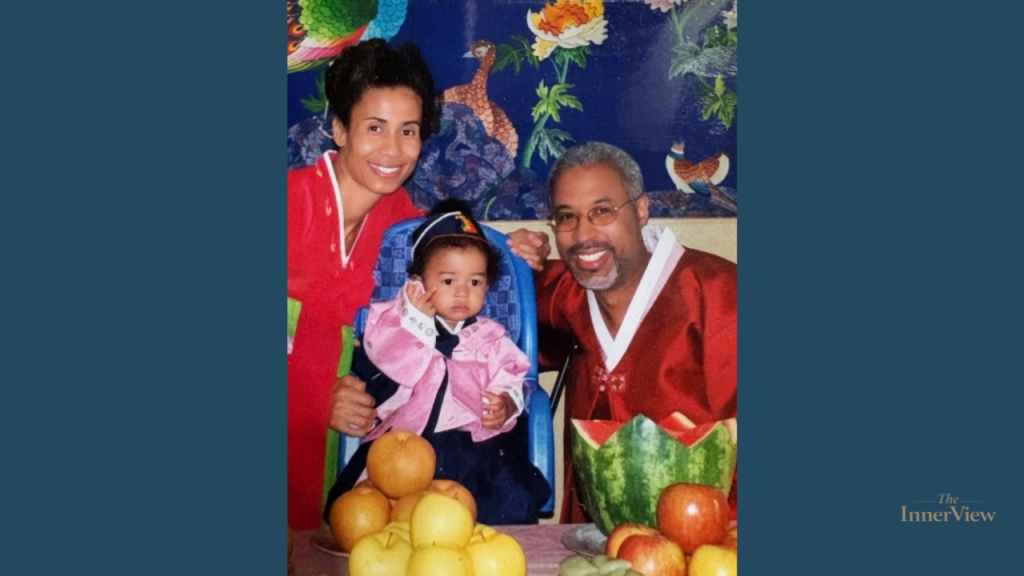
For years, I was afraid to have children. My mother had died giving birth, and I couldn’t escape the fear that the same thing might happen to me. Then, eight years into our marriage, our daughter arrived.
Her name is Jasmine.
To me, she is living proof that God had a plan for our lives all along.
Not a Nine-to-Six
What did you do once you were in Georgia?
When I moved to Georgia, I took an office job with a Korean-owned company in Chamblee. It was a regular nine-to-six job, but from the beginning, I knew it wasn’t where I was meant to stay. God kept placing the same words on my heart: Help people. That’s your work.
So I never built my life around a career. I built it around people. We weren’t wealthy, but I never worried about that. As long as I could help the people God placed in my path, I felt I was doing what I had been called to do.
That calling had begun years earlier. In 1980, while living in California, I joined St. James Missionary Baptist Church and founded Kessee’s Special Children Choir, which I led for more than thirteen years. After moving to Georgia, James and I became members of Metro World Church in Stone Mountain. There, I founded Coy Barker’s Angelic Choir and directed it for nearly a decade. I’ve always loved children.
About four years after Jasmine was born, severe migraines forced me to step away for a time. The pain was so intense that I could barely stand. Even then, I never stopped looking for ways to serve. Whenever someone needs help, I give whatever I can. I’ve always tried to live a God-centered life.
The Brother She Never Knew
The search for your roots went on.
In 2017, my whole family traveled to Korea together for the first time. For me, it felt like a homecoming—and a blessing.
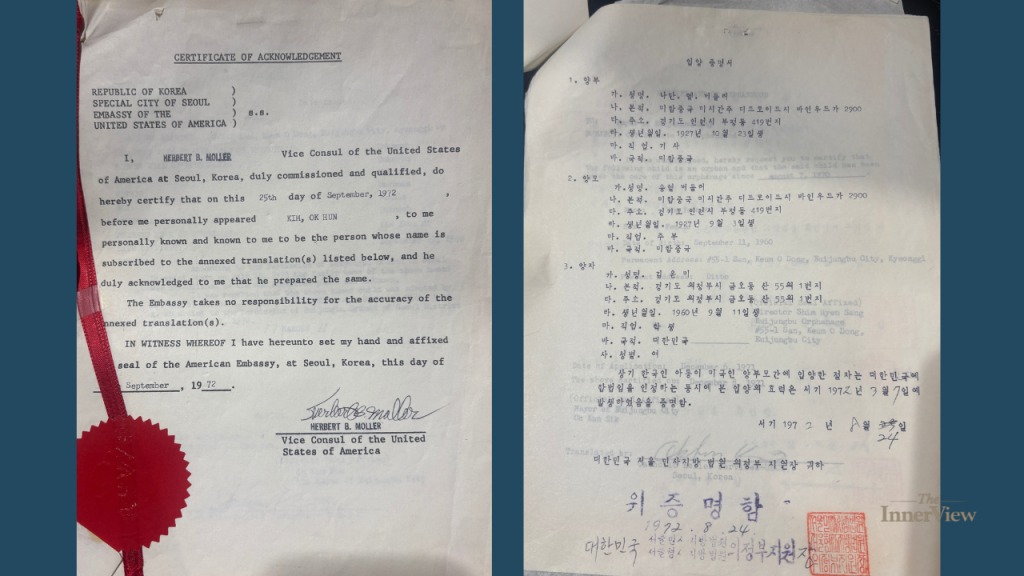
Then, in 2019, a DNA test led me to a brother. His name is Dennis. We share the same father, Charles Bernard White, an African American serviceman, but we have different mothers. Dennis was born in Hawaii to a German mother. For fifty-eight years, neither of us knew the other existed. Then, suddenly, we found each other. Imagine that joy.
That same year, I joined a Motherland Tour in Korea with other Hapas. Hapa⁷ is a Hawaiian word commonly used to describe people of mixed Asian or Pacific Islander and another race, often Western. For many of us, it was more than a trip. It was a chance to stand beside people whose stories echoed our own.
In 2020, Hapa Nation One was founded. Working with the Los Angeles City Council, we helped establish May 19 as Hapa Day.
People like me came together. We affirmed one another’s identity. We held one another up.
The little girl who had been called ainoko⁸ all her life had finally found a place where she belonged.
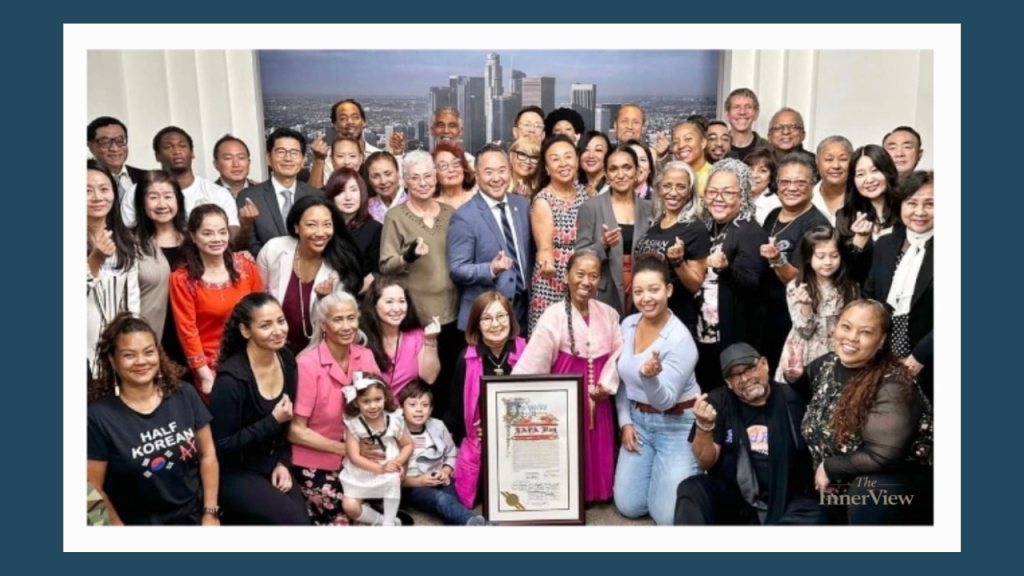
7. Hapa — a person of mixed Asian or Pacific Islander and Western (often white) heritage. 8. Ainoko — an old, now-derogatory term of Japanese origin once used for mixed-race children.
The Reluctant Candidate
How did you come to run for city council?
I had no interest in politics—not an ounce. It had never crossed my mind.
One day, my car broke down, and I stopped at a repair shop. There, I met a Korean man who asked me to help translate. Afterward, he looked at me and said, “If someone like you, who speaks both Korean and English, became a council member, think of how many people you could help.”
I laughed. Politics had never crossed my mind, and I certainly didn’t have the money to run a campaign. But he wouldn’t let it go. So I prayed, “God, if this is truly Your will, let me run unopposed.” I had neither the money nor the experience, so I asked Him to remove the competition altogether.
That’s exactly what happened.
I ran unopposed, and in 2021, I became the first African American council member in the city of Lilburn and the first Asian council member among Gwinnett County’s sixteen cities.
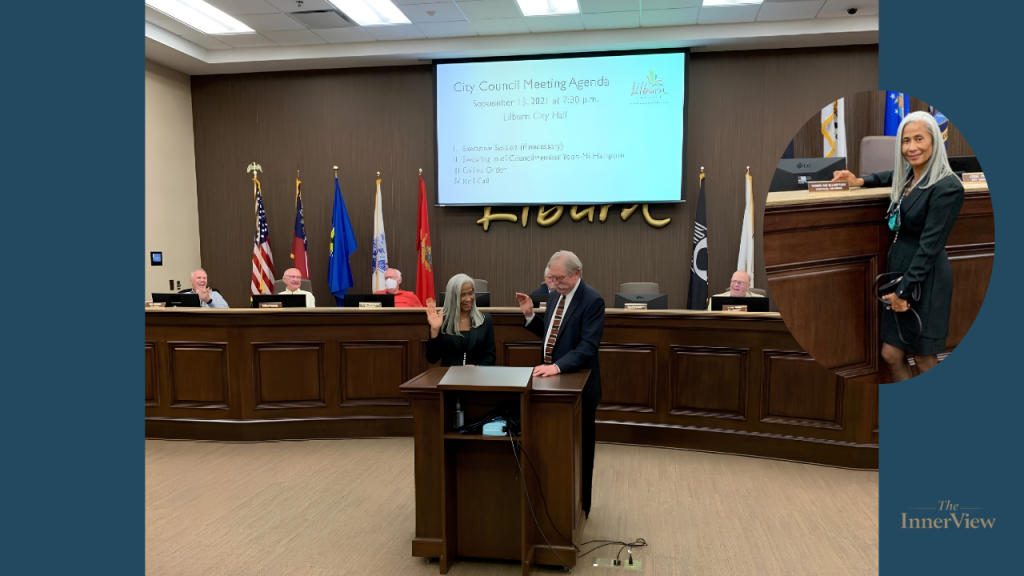
For the next two years, I crisscrossed Lilburn carrying out city duties while serving people however I could. Nothing grand. I changed lightbulbs for seniors living alone, drove them to doctor’s appointments, helped them bathe, and simply tried to be there whenever someone needed a hand.
I think that spirit began long before politics. As a little girl in Uijeongbu, I used to sing my school song: “Helping one another, hand in hand.” Somehow, those words never left me.
I lost my re-election bid in 2023 by just over a hundred votes. But I never believed helping people depended on holding public office. Whether I’m in the office or not, that’s the life I’ve always tried to live.
9. Dobongsan — a granite mountain on the northern edge of the Seoul region, near Uijeongbu.
“Look at the Good”
Helping people for so long, you must have been hurt along the way.
Oh, many times.
For six years, I cared for one blind eye Pakistani woman who lived nearby. I helped with everything—her meals, paperwork, doctor’s appointments, even legal matters that would have cost thousands of dollars. Then one day, neighbors falsely told her I was trying to take her house. She believed them and asked me to leave.
For a long time, anger rose in me whenever I saw the people who had spread those lies. So I prayed, “God, I don’t want to sin. Every time I see them, I become angry. This isn’t the Christian way. Please help me forgive.”
A few days later, they unexpectedly moved away. Before they left, I went to see them. “I know what you did to me,” I said. “But it’s all right. I forgive you.”
The neighbor looked at me and asked, “Can you give me a hug?”
So I did. Some people tell me I’m a fool—that I keep helping even after I’ve been hurt. But Jesus loved us even though He knew the cross awaited for Him. I’ve learned not to dwell on the people who hurt me. I choose to remember the people who showed me kindness.
Don’t look at the bad. Look at the good.
None of us knows when our time on earth will end. I simply want to live in a way that, when I stand before God, I can do so with a clear conscience.
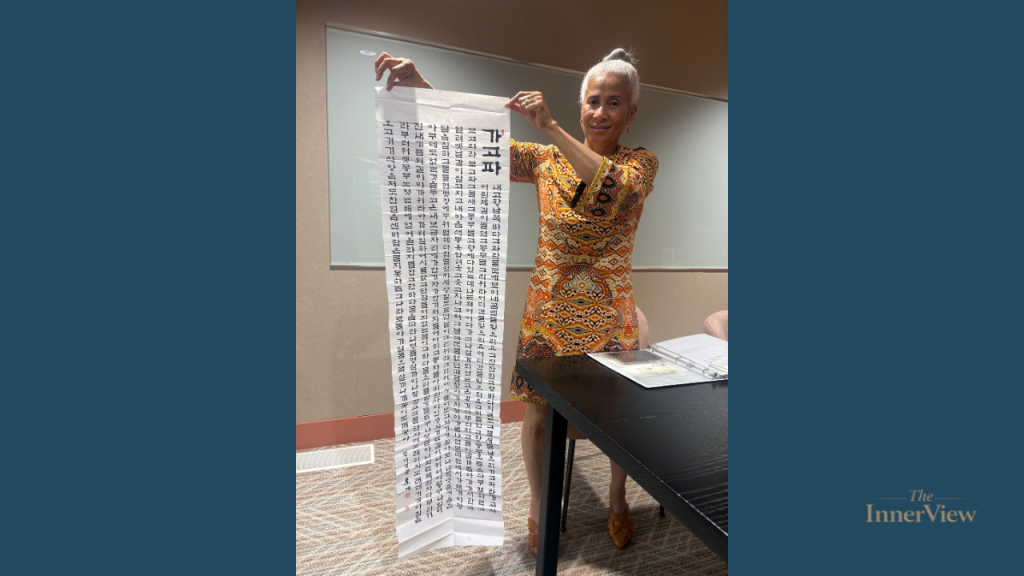
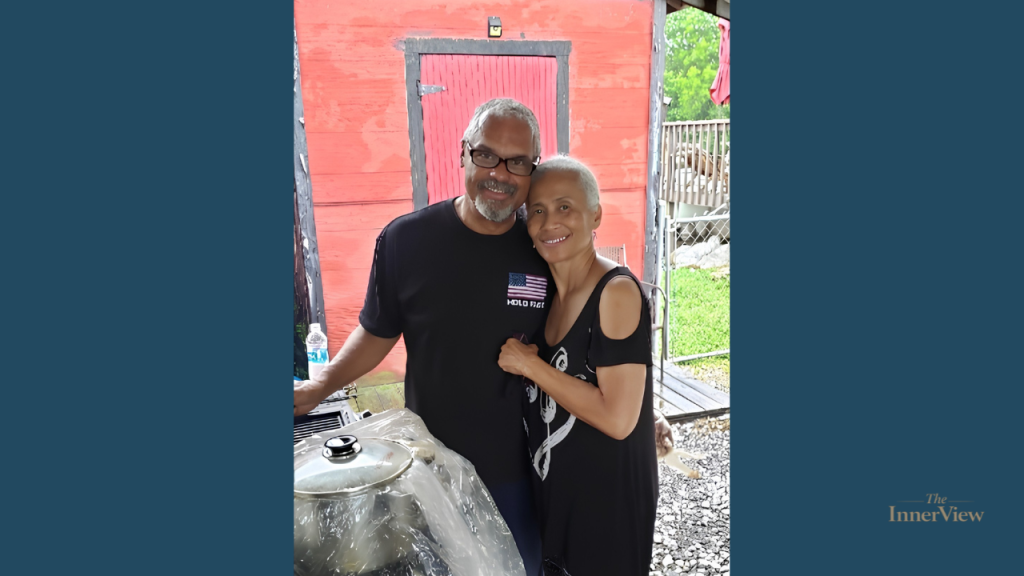
There were many partings in Yoon-mi Hampton’s life. But she was rarely without love. Her mother, her aunt, and her grandmother. The orphanage director, her teachers, and her friends. The father who crossed an ocean to find her. Each, in a different way, carried her forward. Her husband, James, has walked beside her for more than thirty years.
Even now, she still shows up—to change a lightbulb, drive someone to a doctor’s appointment, or simply sit beside someone who needs company. Perhaps because she was loved so deeply, she has spent her life passing that love on. The verse she found in the sand has never left her.
That is how Yoon-mi Hampton lives.
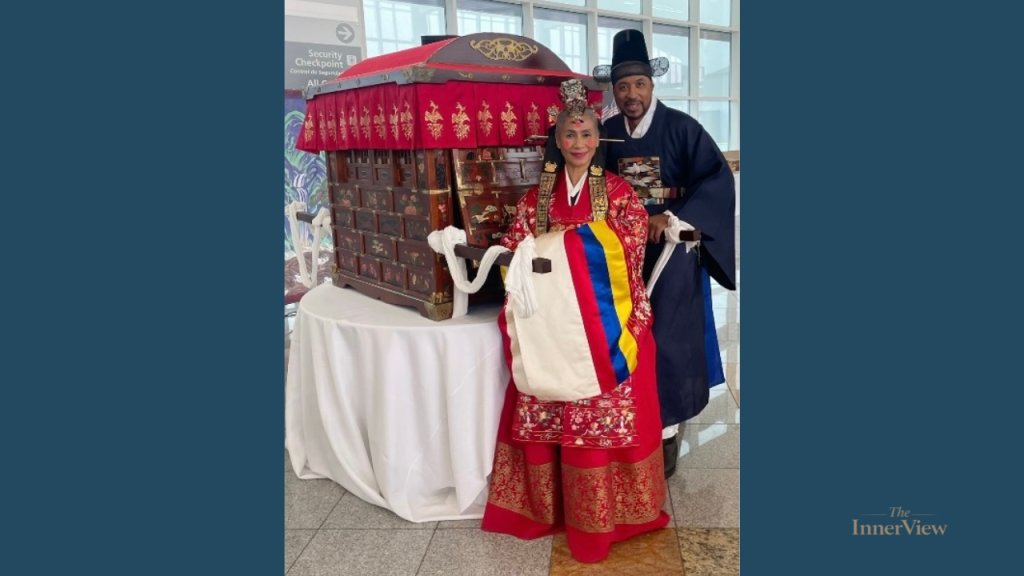
10. Hanbok — traditional Korean formal dress, worn on holidays and at ceremonies such as weddings.
By Eunice Lee / InnerView No. 21 · June 24, 2026
